
“It’s not only about us developers and humans. You are interacting with another entity, and now the input you give it is different. The beauty of that input today is that it’s in natural language, meaning you can just talk to it — not only through voice, but also in multiple languages.” This is how Mario Rodriguez, Chief Product Officer (CPO) at GitHub, explains how AI-assisted coding is changing software engineering and why we need to reset our expectations of what software engineering really is. “At the core of Agent HQ are developers, with the foundation being developer collaboration.”
“The future of agentic AI ultimately lies in the continued abstraction of that input layer, the creation of new tools to interact with it, and a collaboration engine that democratises the process where everyone learns from each other in a continuous loop,” Rodriguez tells indianexpress.com in an interview at Universe 2025 in San Francisco. “One of the core aspects of agentic development at GitHub is providing a platform that’s incredibly accessible to everyone, offering tools that make it extremely easy to work with this new form of input. And that new input is agents.”

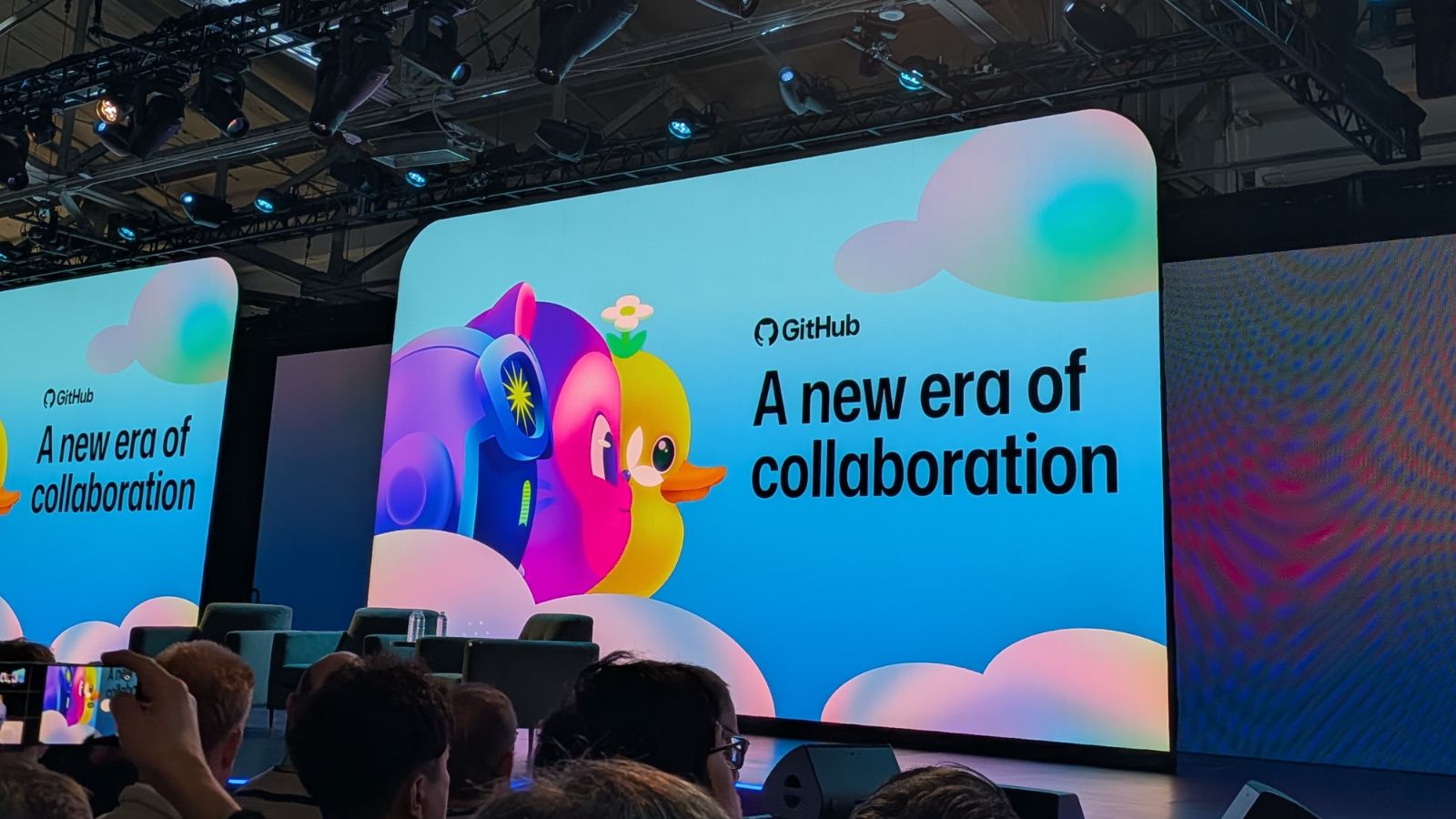 GitHub holds an important place in the software development world: it’s both a giant repository of open-source code and arguably the single largest collaboration community in history. (Image: The Indian Express/ Anuj Bhatia)
At GitHub’s flagship Universe 2025 event in the heart of Silicon Valley, one of the big discussions has been about how GenAI tools are shaping software engineering and how they may impact developers and the tech industry at large. A shift toward collaborating with AI, multimodal capabilities, autonomous yet guided approaches, and an English-first development environment is real.
Despite certain reservations, AI excels at quickly prototyping ideas and rapidly testing concepts. At the same time, it dramatically reduces the time spent on routine coding tasks, allowing developers to focus on solving real problems. All this is leading to the rise of agentic software engineering and by “agentic,” it means that instead of merely responding to prompts, these systems can plan, execute, and iterate on solutions with increasing autonomy.
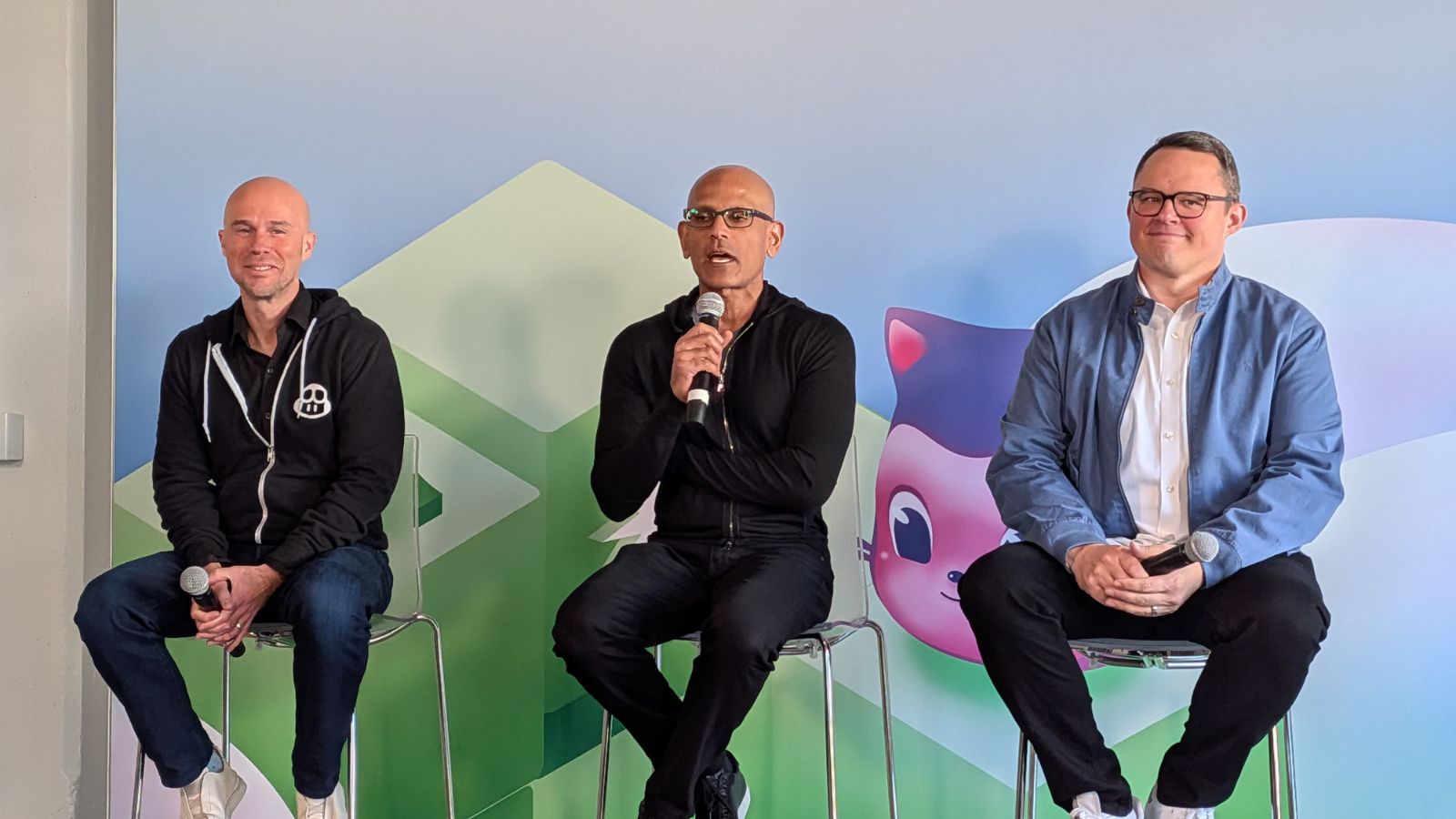 Rodriguez reminds us that the goal isn’t to write code faster, but to build better software. While “better” can be subjective, AI can help show the path to doing it right. (Image : The Indian Express/ Anuj Bhatia)
By GitHub’s own admission, the multimodal future is where the industry is headed, a future where the next generation of tools will do more than just work with code. Multimodal capabilities allow “agents” to interact with software the way humans do.
That’s why GitHub is launching Agent HQ, a new agentic developer platform designed to unite Codex, Claude, Jules, and other coding agents, giving developers a new “mission control” interface to manage multiple AI agents from different vendors on a single platform. The idea behind what GitHub calls “Agent HQ” is to create an environment where coders and AI agents can truly collaborate.
GitHub holds an important place in the software development world: it’s both a giant repository of open-source code and arguably the single largest collaboration community in history. As more tech companies deploy AI agents, which is already happening, it makes sense to tightly integrate them into the GitHub environment. However, this cannot work within a walled garden, which is why the Microsoft-owned developer platform is taking an open approach.
Story continues below this ad
 A shift toward collaborating with AI, multimodal capabilities, autonomous yet guided approaches, and an English-first development environment is real. (Image: The Indian Express/ Anuj Bhatia)
“What a software developer is today is someone who creates software through these new input methods. That doesn’t mean you need to know Python from day one — that’s not the point. Through these new input methods and natural language, you can simply say, ‘Copilot, write me an app that takes these pictures and turns them into graphics,’ and just like that, you have turned yourself into a software developer. It’s a new input and a new abstraction layer,” Rodriguez elaborates, explaining how software is developed in the AI age.
AI does iterate and experiment faster but this only happens if we use AI as a tool, not as a replacement for good software practices or by removing humans from the loop. Rodriguez reminds us that the goal isn’t to write code faster, but to build better software. While “better” can be subjective, AI can help show the path to doing it right.
However, the truth remains that AI tends to help experienced developers more than junior ones. Think of it like having a junior developer on the team – they can write code quickly, but they still need constant monitoring, correction, and supervision. While senior developers use AI to accelerate tasks they already understand, junior developers often rely on AI to learn what to do. The results and the expectations from AI can therefore be very different.
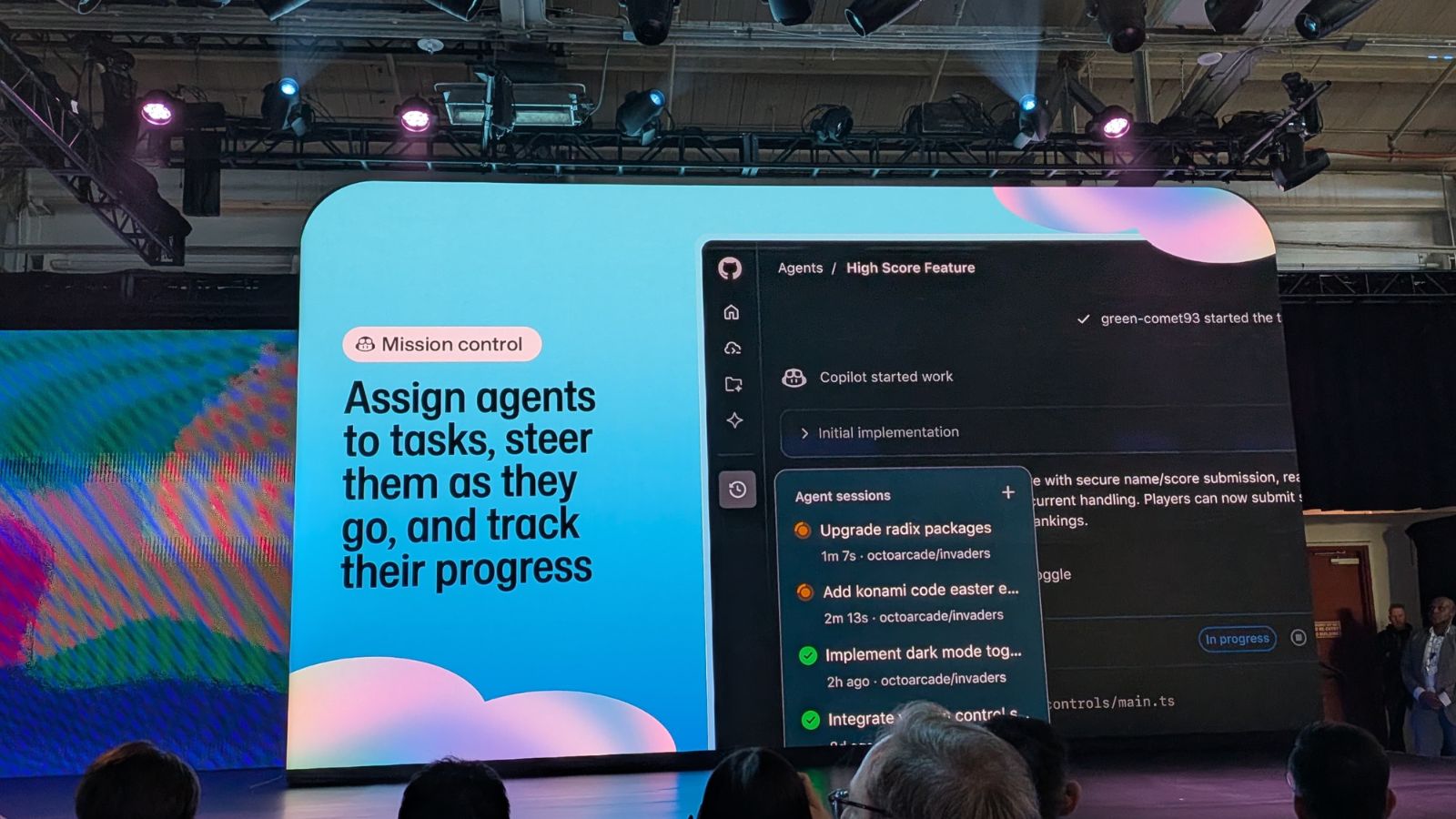 As more tech companies deploy AI agents, which is already happening, it makes sense to tightly integrate them into the GitHub environment. (Image: The Indian Express/ Anuj Bhatia)
Rodriguez emphasises the importance of curiosity and creativity as core human traits that drive innovation and to become a software engineer in the AI age we are in. He encourages developers to stay curious, understand foundational principles like math and physics, and apply their creativity through new AI agents and input methods. Coding, he adds, isn’t about mastering one language like Assembly, C++, or Python, but about exploring multiple tools and inputs to achieve meaningful outcomes.
Story continues below this ad
TypeScript, Microsoft’s strongly typed JavaScript variant, has become the most-used language on GitHub, overtaking both JavaScript and Python, according to GitHub’s Octoverse 2025 report released this week. Its rise is attributed to the demand for AI-assisted development, which makes agent-assisted coding more reliable in production. The report also noted that the use of generative AI tools is now standard in development, with more than 1.1 million public repositories using an LLM SDK, 693,867 of which were created in the past 12 months.
GitHub now hosts 630 million projects with over 180 million developers using the platform. There were 43.2 million pull requests and 1.12 billion contributions to public projects.