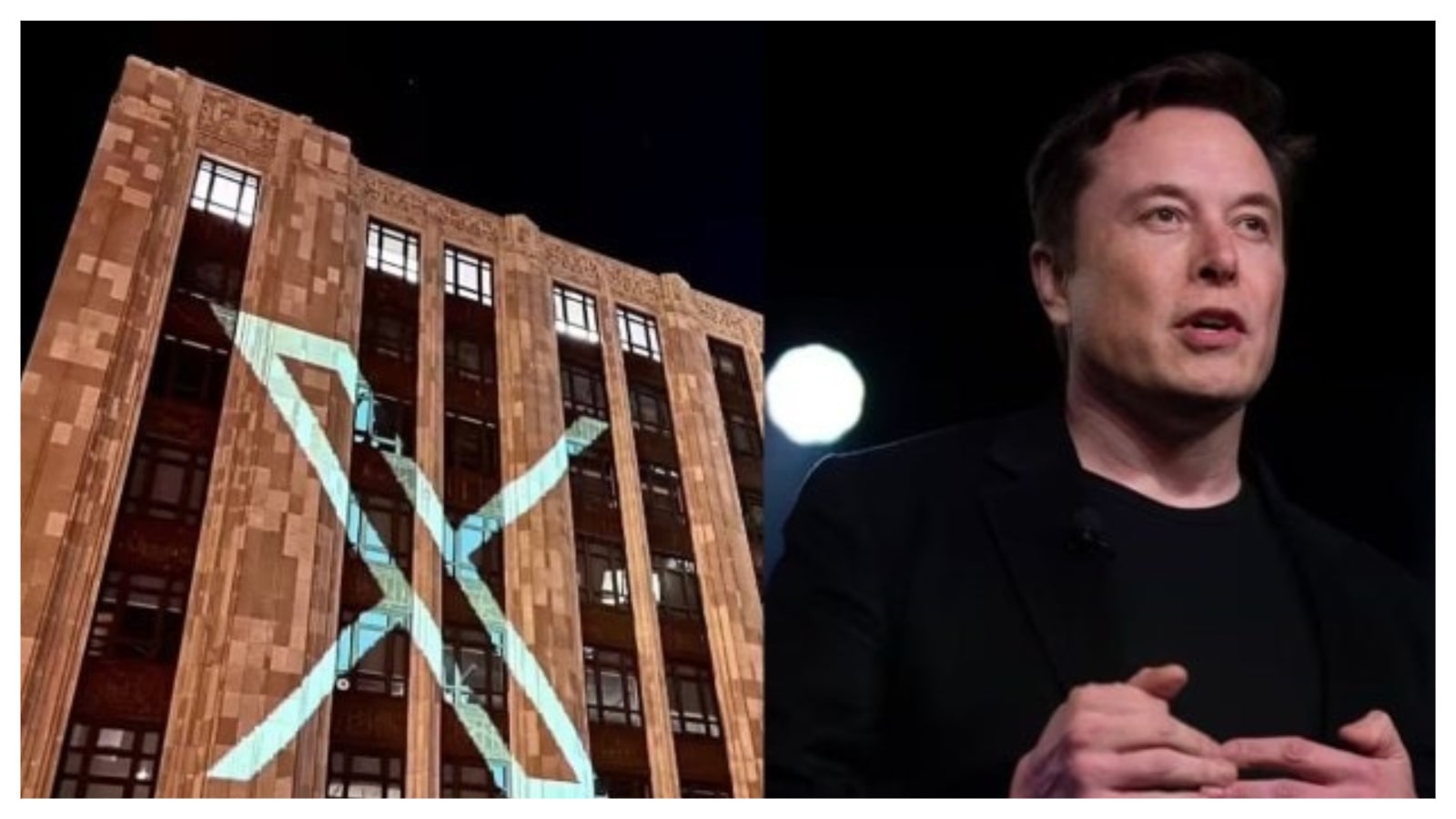
Elon Musk-owned X has taken down the European Commission’s advertising account just days after the social media platform was hit with a 120 million euro ($140 million) fine by the European Union (EU) for violating its transparency rules under the Digital Services Act (DSA).
The platform further accused the EU’s executive arm of trying to amplify its own social media post about the fine imposed on X. The European Commission tried “to take advantage of an exploit in our Ad Composer — to post a link that deceives users into thinking it’s a video and to artificially increase its reach,” Nikita Bier, X’s head of product, wrote in a post on the platform on Sunday, December 7.

The move escalates a long-standing feud between Musk’s platform and EU regulators over free speech, misinformation, online regulation, platform design and accountability, among other issues. It is one of several disputes that X has been embroiled in outside the United States this year, largely owing to the platform’s content moderation practices and devil-may-care approach to free expression that has ruffled more than a few feathers.
The ruling
Following a two-year investigation into X, the European Commission imposed a 120 million euro fine on the platform for violating the DSA’s transparency requirements. The ruling issued on Friday, November 5, specifically cited the platform’s deceptive design of its ‘blue checkmark’, the lack of transparency of its advertising repository, and the failure to provide access to public data for researchers, as breaches of the bloc’s digital regulations.
Passed in 2022 and coming into effect in 2024, the DSA classifies all online intermediary platforms into four categories, namely: Intermediary services, hosting services, online platforms, and Very Large Online Platforms (VLOPs) – platforms having more than 45 million users. The sweeping rulebook requires online platforms to protect European users by cleaning up harmful or illegal content and products on their sites, under threat of hefty fines up to six per cent of their annual global sales.
EU regulators have said that X has failed to provide transparency around its adverts, and did not give researchers access to public data. But the main focus of the investigation was X’s paid blue ticks.
Before Elon Musk purchased X, when it was known as Twitter, the platform issued a blue tick verification badge to a user only if they supplied proof of who they were. It was mainly reserved for celebrities, politicians, journalists, official accounts of organisations, and other influential accounts.
Story continues below this ad
After Musk acquired X in 2022, the platform announced any user could get a blue tick next to their profile name as long as they paid a monthly subscription fee. It was part of a sweeping set of changes made by the SpaceX and Tesla CEO, who argued that the old verification system was opaque and unfairly gatekept users. Musk also framed paid blue ticks as a way to curb bots while turning verification into a new revenue stream for the platform.
But the European Commission said that X deceived users by allowing people to pay for a blue tick on their profile and not “meaningfully verifying” who is behind the account. “This deception exposes users to scams, including impersonation frauds, as well as other forms of manipulation by malicious actors,” it said.
The Commission further said that the fine imposed on X was calculated by “taking into account the nature of these infringements, their gravity in terms of affected EU users, and their duration.”
The pushback
Stepping up his criticism of the bloc, Musk called for the EU to be abolished after his platform was fined. “The EU should be abolished and sovereignty returned to individual countries, so that governments can better represent their people,” he said in a post on X.
Story continues below this ad
The Commission’s decision also rekindled tensions between the EU and United States, with several members of the Trump administration, including US Vice President JD Vance, accusing the bloc of targeting US tech companies with its digital regulations.
“The EU should be supporting free speech not attacking American companies over garbage,” Vance wrote on X. “The European Commission’s $140 million fine isn’t just an attack on @X, it’s an attack on all American tech platforms and the American people by foreign governments. The days of censoring Americans online are over,” US Secretary of State Marco Rubio posted on X.
“Europe is taxing Americans to subsidise a continent held back by Europe’s own suffocating regulations,” wrote Brendan Carr, chair of the Federal Communications Commission (FCC).
Denying that the EU’s rules were intended to muzzle big tech companies, EU officials said that the Commission “not targeting anyone, not targeting any company, not targeting any jurisdictions based on their color or their country of origin.” “This is based on a democratic process,” European Commission spokesperson Thomas Regnier was quoted as saying.
Story continues below this ad
X has 60 days to inform the Commission about how it plans to fix its ‘deceptive’ blue checkmark practices, and another 90 days to submit an action plan on addressing DSA breaches related to its ad repository and researcher access to public data.
The bigger picture
In its operations outside the United States, X has been caught between socially conscious regulators eager to curb the social media harms threatening citizens and authoritarian regimes looking to suppress dissent.
Brazil, Ireland, Canada, Australia, and the EU’s member countries have locked horns with X this year over their respective policies concerning hate speech and age verification. French prosecutors opened a criminal probe into X on allegations of foreign interference with biased algorithms.
In May 2025, X filed a lawsuit against the Turkish government’s order to block the account of an opposition leader. A few months later, the Turkish governemnt shut down Grok, an AI chatbot developed by Musk-owned xAI, for generating allegedly offensive responses about President Recep Tayyip Erdoğan.
Story continues below this ad
In India, the social media giant has clashed with the central government on several issues in the past and most recently over the legality of the Sahayog portal, a mechanism that automates content takedowns and allows government agencies to directly order social media platforms to remove content they deem unlawful.
Within the United States, X is said to have benefited from the favour of the White House and Republican party members, who see Musk as an ally in their campaigns against more liberal-skewing tech platforms.
For Musk, X has become a vessel for promoting his vision of free speech. He has more leeway to pick these fights overseas because the platform has a smaller user base than other major platforms and is not a big revenue generator compared to other companies led by the billionaire. However, that may change if Musk advances his plans to make X into an ‘everything app’. Integrating AI companions like Grok and launching payment features on the platform could make his equation with regulators more complicated.