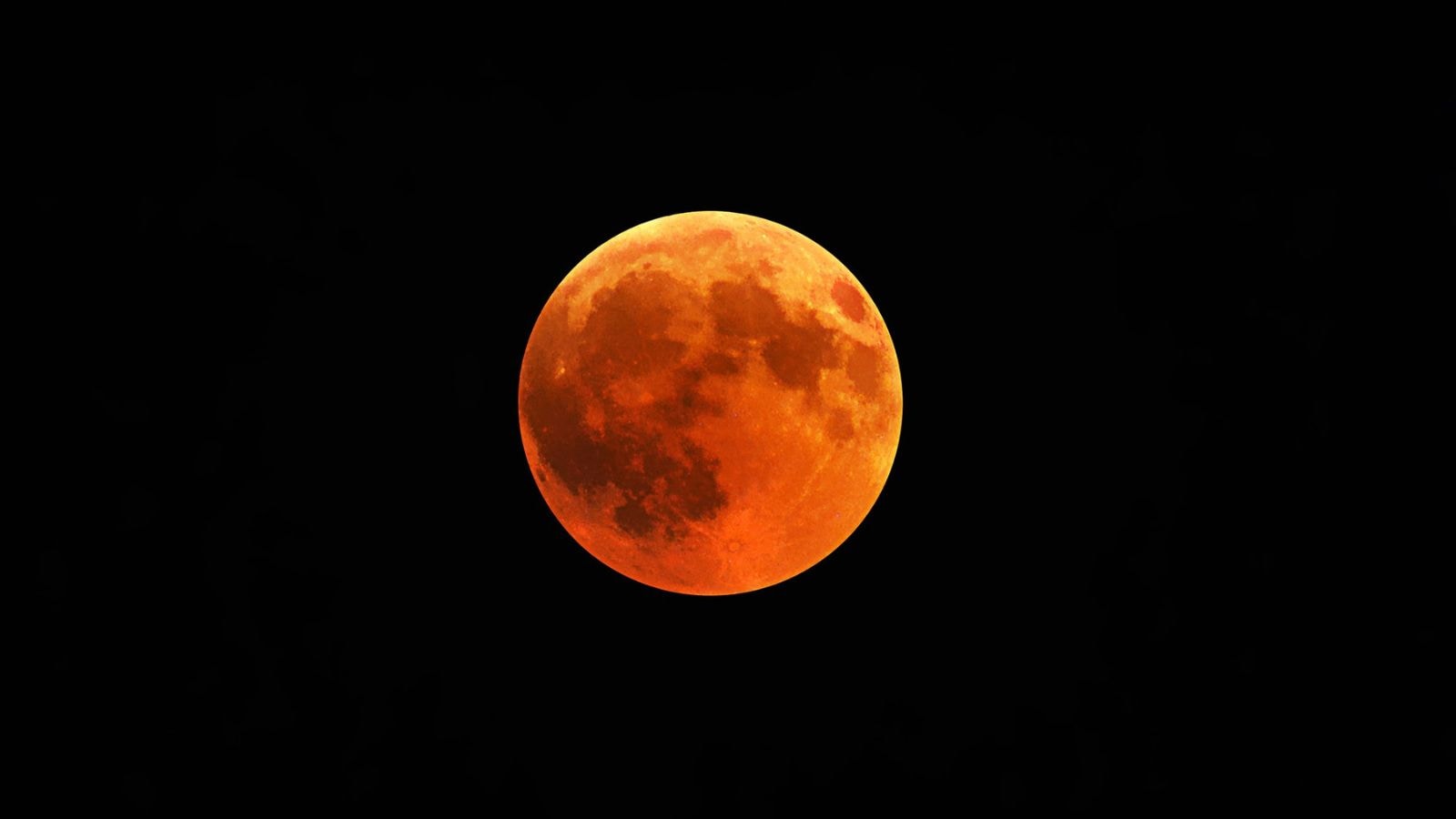
2025’s last full moon will rise tonight (December 4). For eager skywatchers, it is the last chance to witness this celestial event. Cold Moon, the name of December’s full moon, shows how the first full moon of winter rises during the coldest time of the year.
This month witnessed major planetary positions, bright meteor showers, and a significant lunar eclipse on the calendar. The last supermoon is one of the most awaited events. Supermoon is the name given to the moon when its full, and is at its closest point to the Earth in its orbit.

What makes it special?
The full moon of December 2025 will rise on Thursday and Friday or December 4 and 5, respectively. This last full moon marks the arrival of winter and it is also the final full moon of the year. In all this year had three supermoons that were seen in October, November, and December.
A supermoon is a bit larger and brighter than the usual full moon. This happens when the Moon’s perigee or the point in the orbit of the moon is nearest to the Earth. Occasionally, this happens at the same time as a full moon and at that point, it is called the supermoon. Some reports claim that the supermoon can be 14 per cent bigger and 30 per cent brighter than the smallest full moon of the year.
In order to understand why this phenomenon occurs, one should understand that the Moon’s orbit around the Earth is not a perfect circle and it is some 3,82,900 kms away. The apogee (highest point) and perigee changes each month due to the gravitational forces of the Sun, Earth,and other planets. And, these forces also cause the moon’s orbit to be irregular.
For a supermoon, it reportedly needs to be at its closest point in its 27-day orbit and fully illuminated by the Sun and this happens every 29.5 days. This alignment is rare and only happens a few times a year as the Moon’s orbit changes its orientation due to the Earth orbiting the Sun.
How to get the best view?
The Cold Moon Supermoon will reportedly shine in the northeast between 3pm and 5 pm. Those in a dark enough area will be able to see the moon rise above the horizon. The full moon will reportedly don an orange hue. You might not really need a telescope to view the supermoon.
© IE Online Media Services Pvt Ltd