
Google is gearing up to launch smart glasses powered by artificial intelligence in 2026, as the market for AI-driven consumer hardware begins to pick up, with companies like Meta gaining an upper hand. The announcement was made during an event earlier this week.
The Alphabet-owned company’s first wave of smart glasses will be developed in collaboration with Samsung, Gentle Monster, and Warby Parker. The upcoming smart glasses will not launch under Google’s own Pixel brand, which now offers everything from smartphones and earbuds to smartwatches. Google’s strategy appears to follow a similar path to its earlier collaboration with Samsung on the launch of the Galaxy XR mixed-reality headset.

Google is approaching the AI smart glasses market with a long-term strategy, which is why it has outlined two different product paths. The first pair of glasses will be an audio-only, lightweight, screen-free device with built-in speakers, microphones, and cameras, similar to baseline Meta’s Ray-Ban AI glasses. These glasses will allow users to access Gemini, Google’s AI assistant, to ask questions and receive instant responses.
Google is also developing a second pair of smart glasses equipped with a built-in heads-up display that can show information such as navigation directions and language translations. The company said the first of these display-enabled glasses will arrive next year, though it did not specify the exact details.
The AI smart glasses market has begun to gain popularity, boosted by the surprise success of Meta’s Ray-Ban glasses. Although still far from the fully augmented reality devices tech companies ultimately envision, these smart glasses perform useful everyday tasks, acting as practical digital assistants. Meta’s Ray-Ban smart glasses, built in collaboration with eyewear giant EssilorLuxottica, have become the benchmark, and other companies are following in their footsteps.
Since the launch of the second generation in October 2023, they have sold more than 2 million units. Sales tripled in Q2 2025 alone, contributing to Meta’s 22 per cent year-over-year revenue growth. Meta in September introduced Ray-Ban smart glasses with a built-in display for $799. However, the smart glasses segment remains niche, and sales are still only a fraction of what Apple generates from the iPhone.
Tech insiders and experts believe the next big trend in technology will be smart glasses that can be worn on the face and operated simply by speaking to them or looking through them, potentially replacing smartphones altogether. There is already a race in Silicon Valley to create smart glasses that are sleek, lightweight, and fashionable enough to wear all day, everywhere you go.
Story continues below this ad
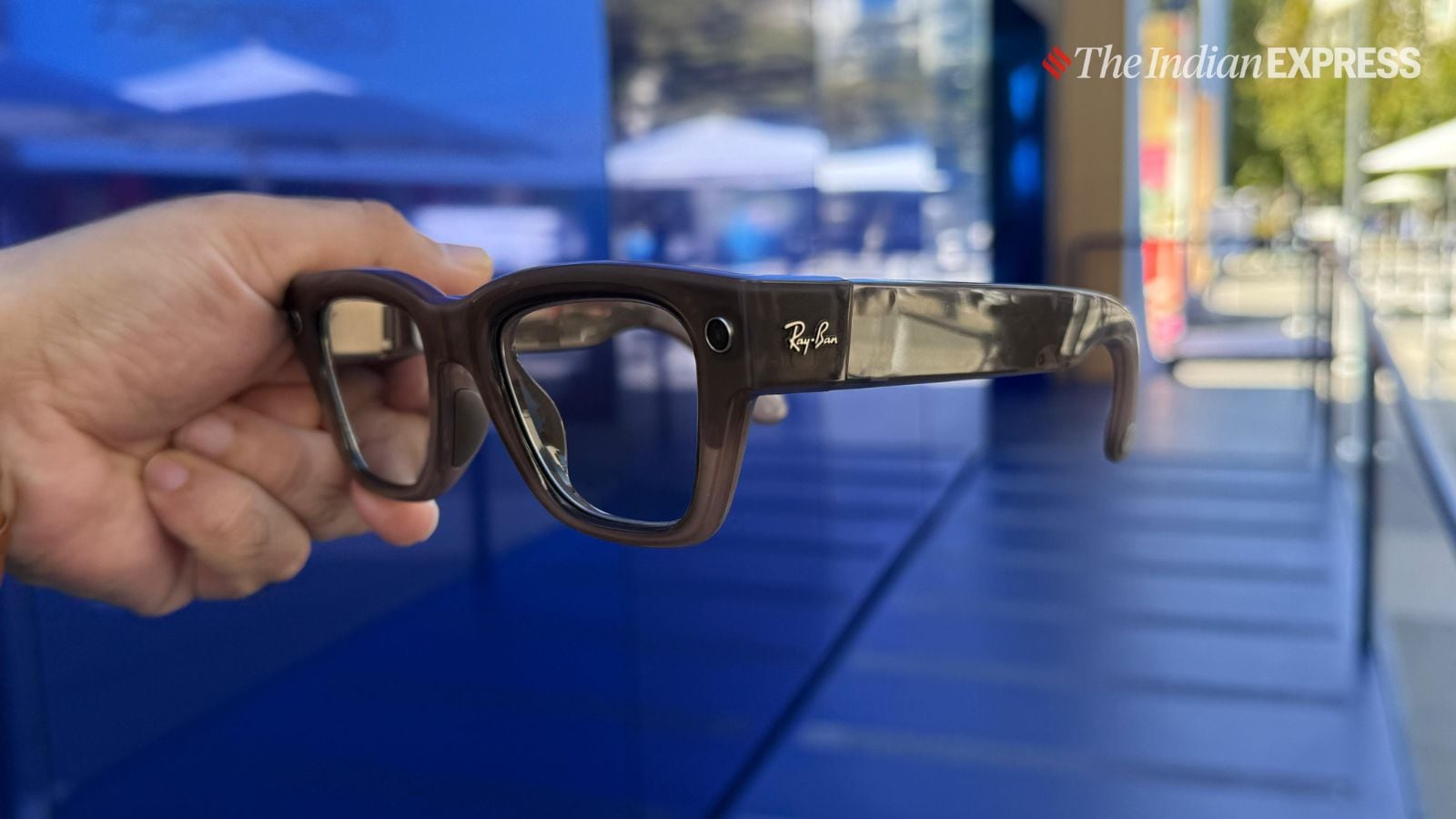 Meta launched its own display glasses in September, which allows users to see features like messages and live captions through a small display that’s built into one of the device’s lenses. (Image credit: Anuj Bhatia/Indian Express)
After Meta, Google wants to join the club, leveraging its software expertise and resources to make smart glasses the default way we interact with devices in the future. However, smart glasses are still far from reaching the level of maturity and advancement that smartphones have today, and current AI features aren’t yet very useful. Apple has yet to enter the market, though reports suggest the company may launch its first smart glasses, similar to Meta’s screen-free AI glasses in either 2026 or 2027.
However, Google has launched smart glasses in the past and experienced failure with Google Glass. The company’s new glasses will be built on top of Android XR, Google’s operating system for headsets. The Mountain View, California–based tech giant this week showcased Project Aura, developed by Xreal and Google, which offers display glasses capable of running Android XR apps like a full mixed-reality headset.

© IE Online Media Services Pvt Ltd