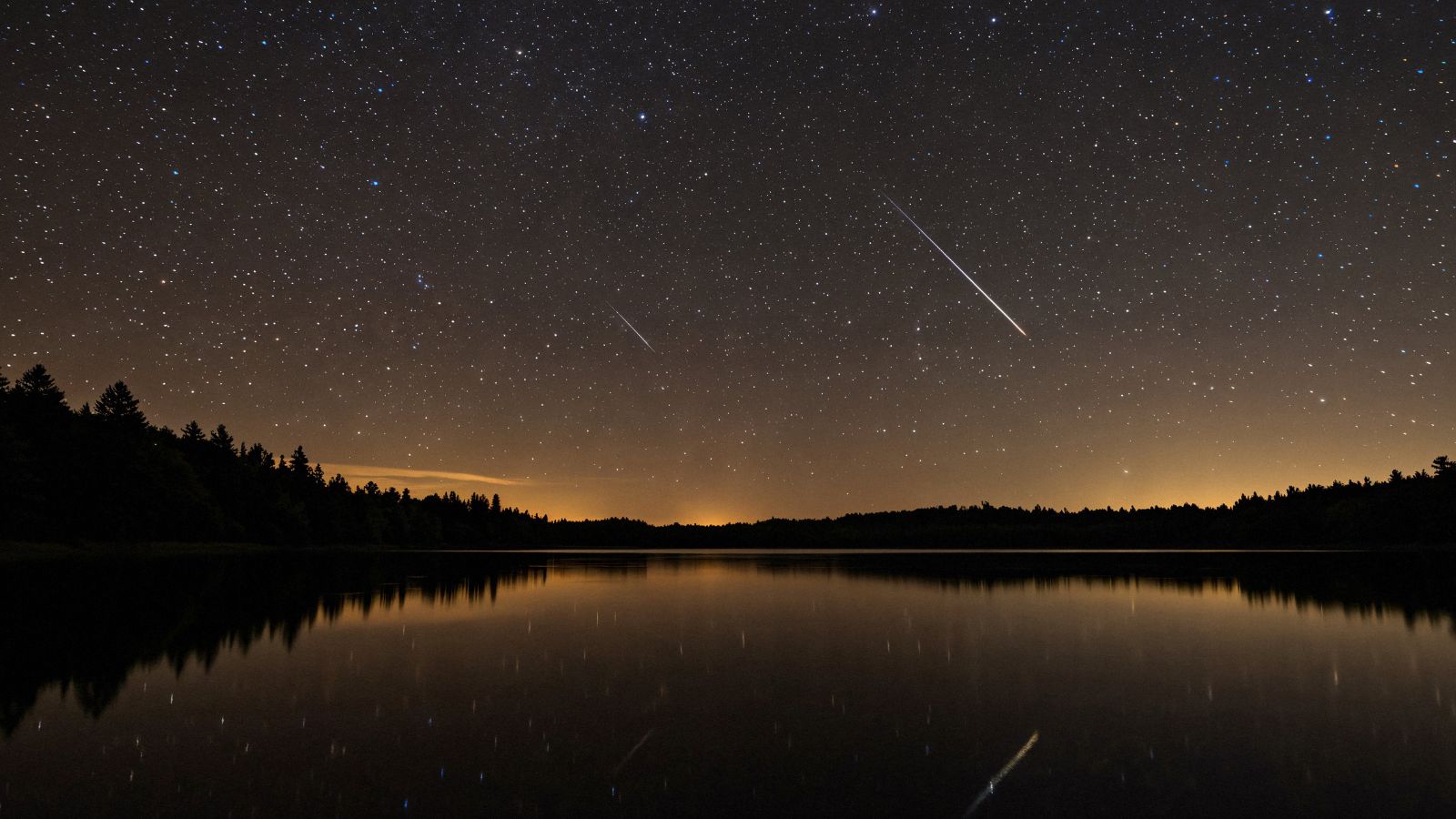
With December evenings approaching, stargazers throughout India have yet another reason to step outside and look up at the sky. The Geminid meteor shower, known for being one of the most consistent and visually stunning events of the year, is returning, offering the expectation of vivid trails slicing through the winter sky.
The meteor shower is anticipated to reach its climax on the night of December 13 and the early hours of December 14, a period that typically produces some of the most significant meteor counts observed annually. In perfect circumstances, watchers can see more than a hundred meteors in one hour, a rate that distinguishes the Geminids from the majority of other yearly showers.

In India, the ideal time for viewing is between 2 am and 4 am IST on December 14. In these hours, the constellation Gemini, where the meteors seem to originate, rises higher in the sky, becoming more directly aligned with Earth’s trajectory through the flow of cosmic debris. The outcome is a more intense and frequent sighting of meteors, with numerous ones shining brightly enough to cut through light pollution.
Also Read: Astronomers spot a rare planet orbiting twin stars with a 300-year-long year
In contrast to certain showers that create brief, weak streaks, Geminid meteors are recognised for their brightness. Numerous ones create bright paths that last for a second or two, making them simpler to see even from urban areas. However, individuals who can access dimmer areas away from streetlights are more likely to experience a significantly more uninterrupted display.
Not everyone, however, will be able to watch the event in person. Cloud cover, winter cold, or urban settings can make outdoor viewing difficult.
The Virtual Telescope Project is set to broadcast the Geminids live from its observatory in Italy, using wide-field cameras designed to capture both bright fireballs and fainter meteors. Space agencies and meteor organisations, including the US-based National Aeronautics and Space Administration (Nasa) and the International Meteor Organization, are also expected to host livestreams on YouTube around the peak period, giving viewers multiple ways to tune in.
Story continues below this ad
Astronomers advise patience for outside observers. Finding an open area of sky, allowing your eyes to acclimatise to the darkness, and avoiding direct looking at the radiant point are the best strategies. Even a brief session under clear skies could unveil unforgettable flashes of light.
© IE Online Media Services Pvt Ltd