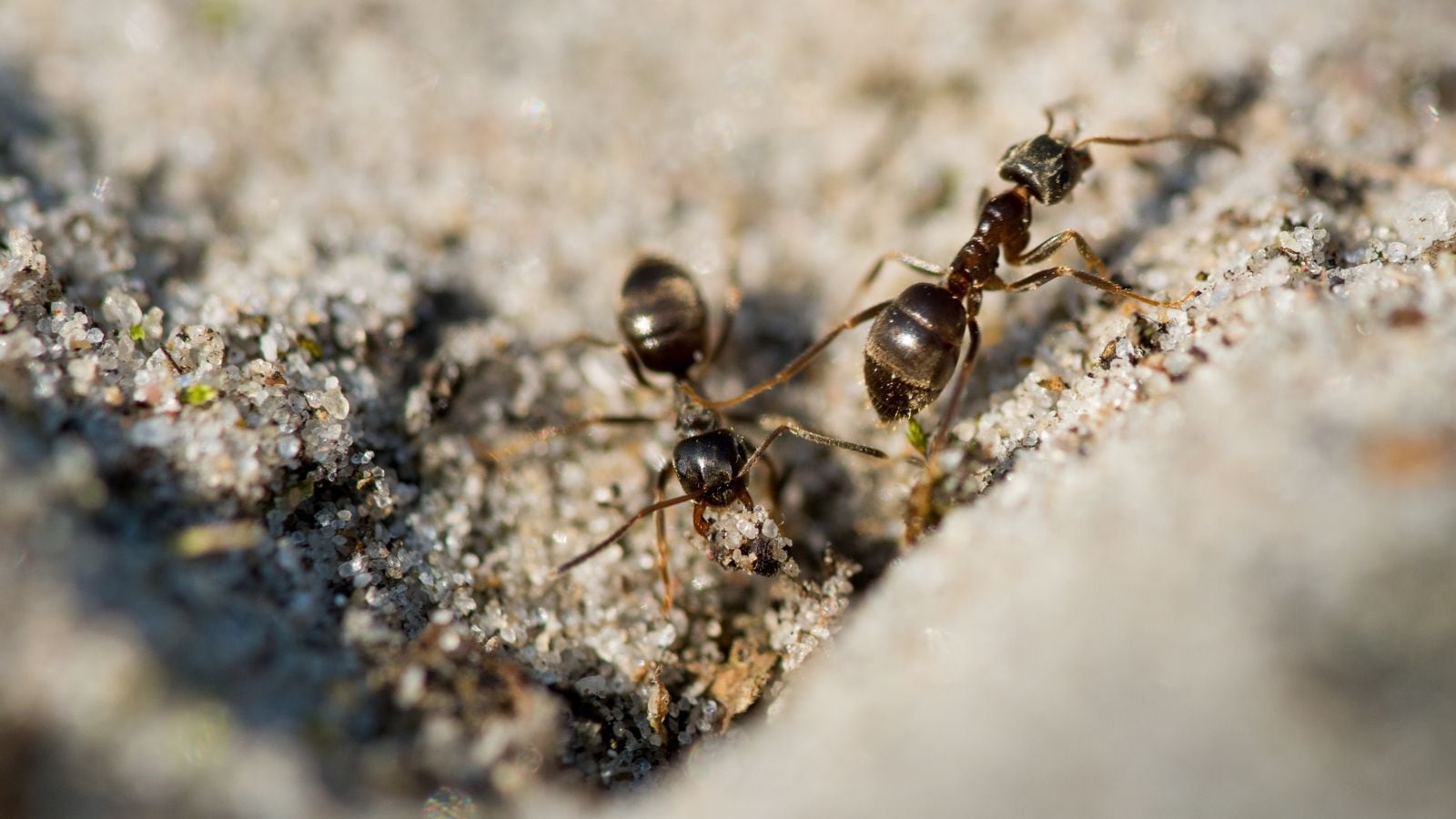
Ant colonies operate with such tight coordination that scientists often compare them to a single living organism, a “superorganism” in which thousands of ants function like the cells of a body. New research from the Institute of Science and Technology Austria (ISTA) reveals just how deep that integration goes. The study shows that ant pupae facing fatal infections release a unique chemical signal, a kind of final warning scent that alerts their nestmates to the danger. The findings, published in Nature Communications, liken this response to the way dying or infected human cells send out distress cues to the immune system.
Unlike many social animals that attempt to hide signs of illness to avoid exclusion, ant pupae do the opposite. When they are struck by an infection that they cannot survive, they emit a chemical alarm indicating that they have become a threat to the colony.

Workers react instantly to the chemical warning
Once worker ants pick up this scent, they act with remarkable speed. They tear open the infected pupa’s cocoon, make small incisions on its surface, and administer formic acid, a potent antimicrobial compound produced naturally by worker ants. Although this treatment halts the pathogens, it also kills the pupa.
“What seems like a selfless act is also beneficial to the dying individual,” says Erika Dawson, the study’s lead author and former postdoctoral researcher in Sylvia Cremer’s Social Immunity group at ISTA. “By alerting the colony, the infected pupa protects genetically related nestmates and indirectly helps pass on its own genes.”
Working with chemical ecologist Thomas Schmitt from the University of Würzburg, the team documented this altruistic form of disease signalling in social insects for the first time. Without it, a dying ant could become a dangerous source of infection, putting the entire colony at risk. By warning early, the doomed pupae allow the colony to eliminate the threat before it spreads.
Why does ants’ survival depend on extreme cooperation?
Ant colonies rely on a division of labour so specialised that it mirrors the way the cells of a body divide tasks. Queens are responsible for reproduction, while workers take charge of food, construction, defence, and health care. This level of interdependence means the colony depends heavily on mutual protection, even when it requires sacrificing infected individuals for the greater good.
This raises an obvious question: if sick ants leave the nest to die, why develop an internal alarm system at all? According to Cremer, the answer lies in the fact that pupae cannot move. “Adult ants can leave the nest when they’re near death, and workers exposed to pathogens often isolate themselves. But brood don’t have this option and must depend on help from their nestmates,” she explains.
Story continues below this ad
Just like infected cells in a human body, the vulnerable pupae send out chemical cues that summon their “immune system”, the worker ants.
How infection alters scent of ant pupae
The research shows that only certain chemical compounds on the pupae’s surface change during a fatal infection. Because these compounds are not airborne, the scent stays closely tied to the infected individual, ensuring workers can pinpoint the exact source of danger without mistaking healthy brood for sick ones.
Schmitt, whose work centres on chemical communication, notes that workers are highly precise. “They can identify one fatally infected pupa among many. The signal is not a cloud drifting through the nest; it is anchored on the pupa’s body.”
To test this, researchers extracted the scent from infected pupae and applied it to healthy ones. The workers immediately unpacked and treated these artificially scented pupae, proving that the altered chemical profile alone is enough to trigger the colony’s disinfection behaviour.
Story continues below this ad
Interestingly, not all developing ants send out this final warning. According to Dawson, queen pupae, which have stronger immune defences and fight off infections on their own and therefore do not release the signal. Worker pupae, however, lack such resilience and rely on nestmates for support.
By emitting the scent only when death is certain, the brood ensures the colony intervenes only when genuinely necessary. Healthy individuals capable of recovery are spared, preventing needless loss. Cremer summarises: “The precise coordination between individual actions and colony-level responses is what makes this early-warning system so efficient.”
About use of animals in research
Studies involving animals remain essential for understanding complex biological processes, including behaviour, immunity and genetics. All ants used in this research were collected and maintained under strict regulations to ensure responsible and humane treatment.