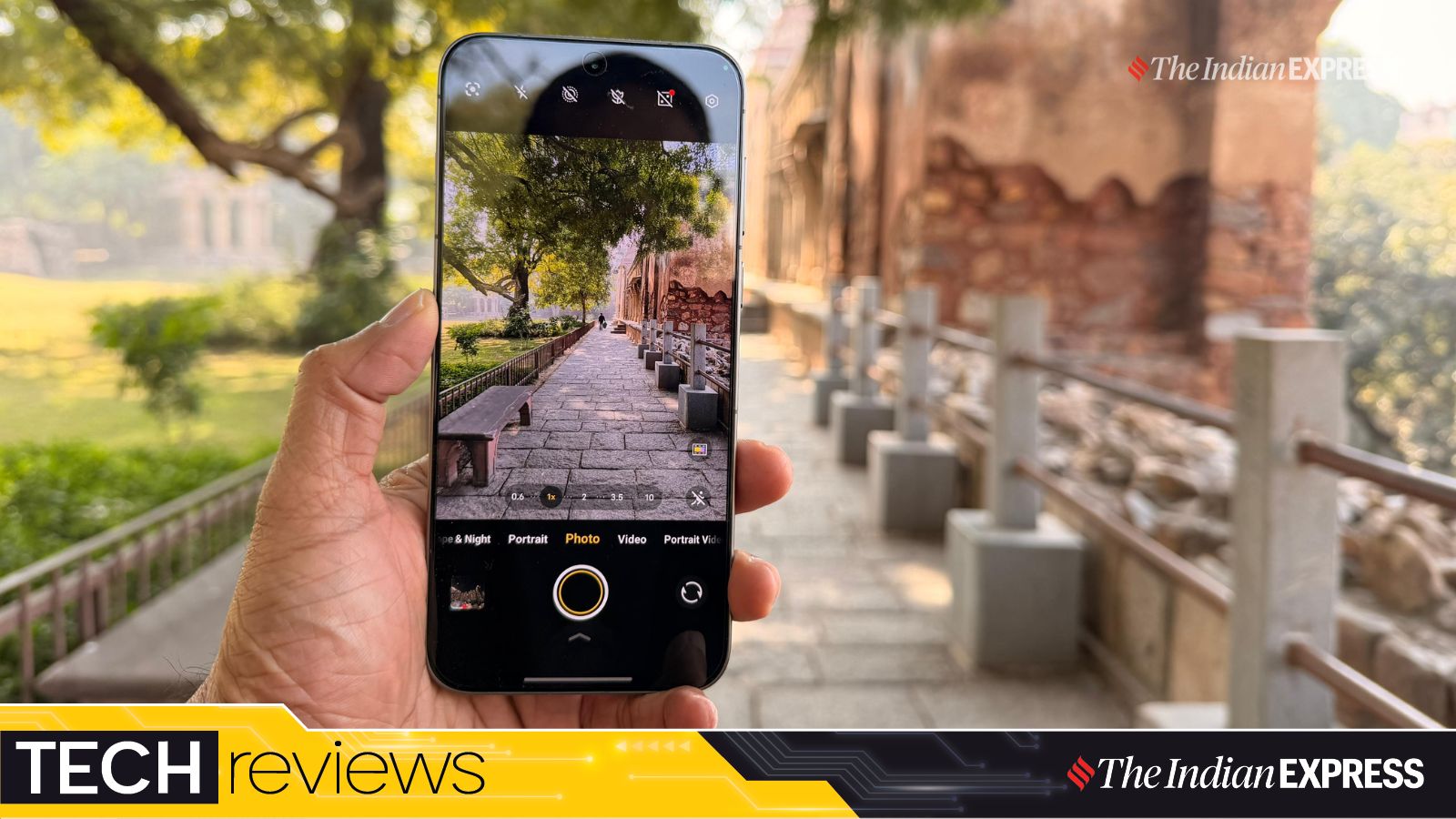
After reviewing the vivo X200 Pro last year, I subconsciously carried the phone around for a few weeks just because of its versatile camera. I am not a fan of Android phones, and my muscle memory of iOS makes it even harder to use it. But I love carrying Android phones that offer camera capabilities iPhones have never really had. The vivo X300 Pro tries to build on that legacy with some improvements for people who want a phone with 100x zoom and a 200MP sensor. I carried it for a couple of weeks as a camera phone, and here is what I got.
Before we dig into the camera, let’s talk a bit about the phone itself. Interestingly, in a year, nothing much has changed, as most of the specs of the vivo X300 Pro are similar to the X200 Pro. It seems more smartphone makers are finding it pointless to change specs every year, especially when it is going to be tougher to translate that to an improvement in experience. Maybe it is time they looked at the naming convention and just added a year to the name of the phone instead of moving it one version ahead.

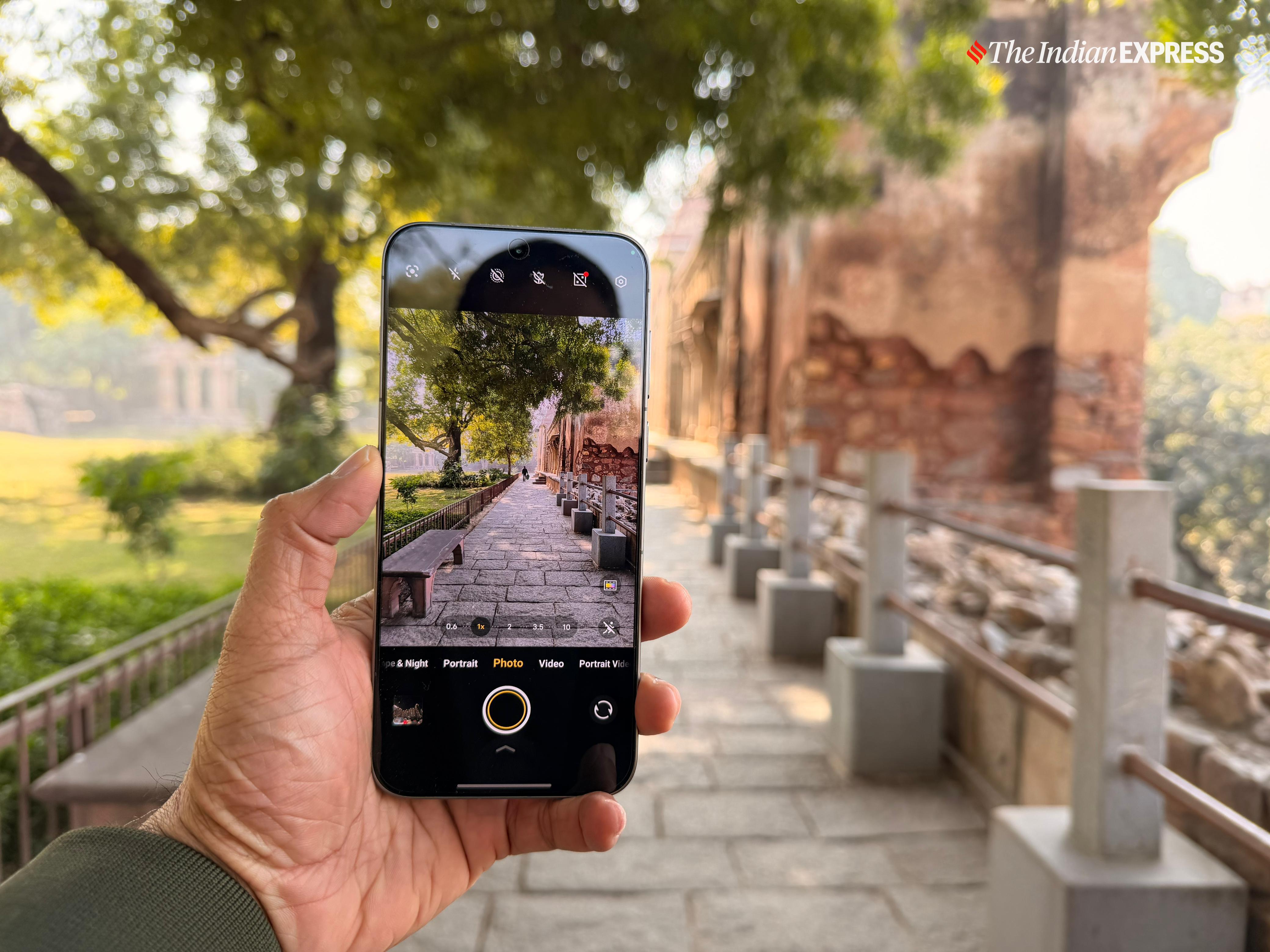 A vivid, contrast-rich screen makes outdoor viewing effortless on the X300 Pro. (Image: The Indian Express/ Nandagopal Rajan)
So the vivo X300 Pro comes with a new Dimensity 9500 processor, a larger 6510 mAh battery and wireless charging, all significant improvements over the earlier edition. There is also an improved 50MP front camera, up from the earlier 32MP. As far as look and feel go, the phone feels the same as before. This translates to good flagship performance with no lag or heating issues, whatever you do with the phone. The battery live easily lasts into the second day after a full charge, though recording a lot of 4K video drains it a bit faster.
However, the camera is always exciting in a Vivo flagship. In fact, I decided to take a trip with my family to the bird sanctuary nearby just because I had this phone with me. This is the sort of decision you take when you have invested in a telephoto lens for your DSLR. The vivo X300 Pro gives you that same level of confidence.
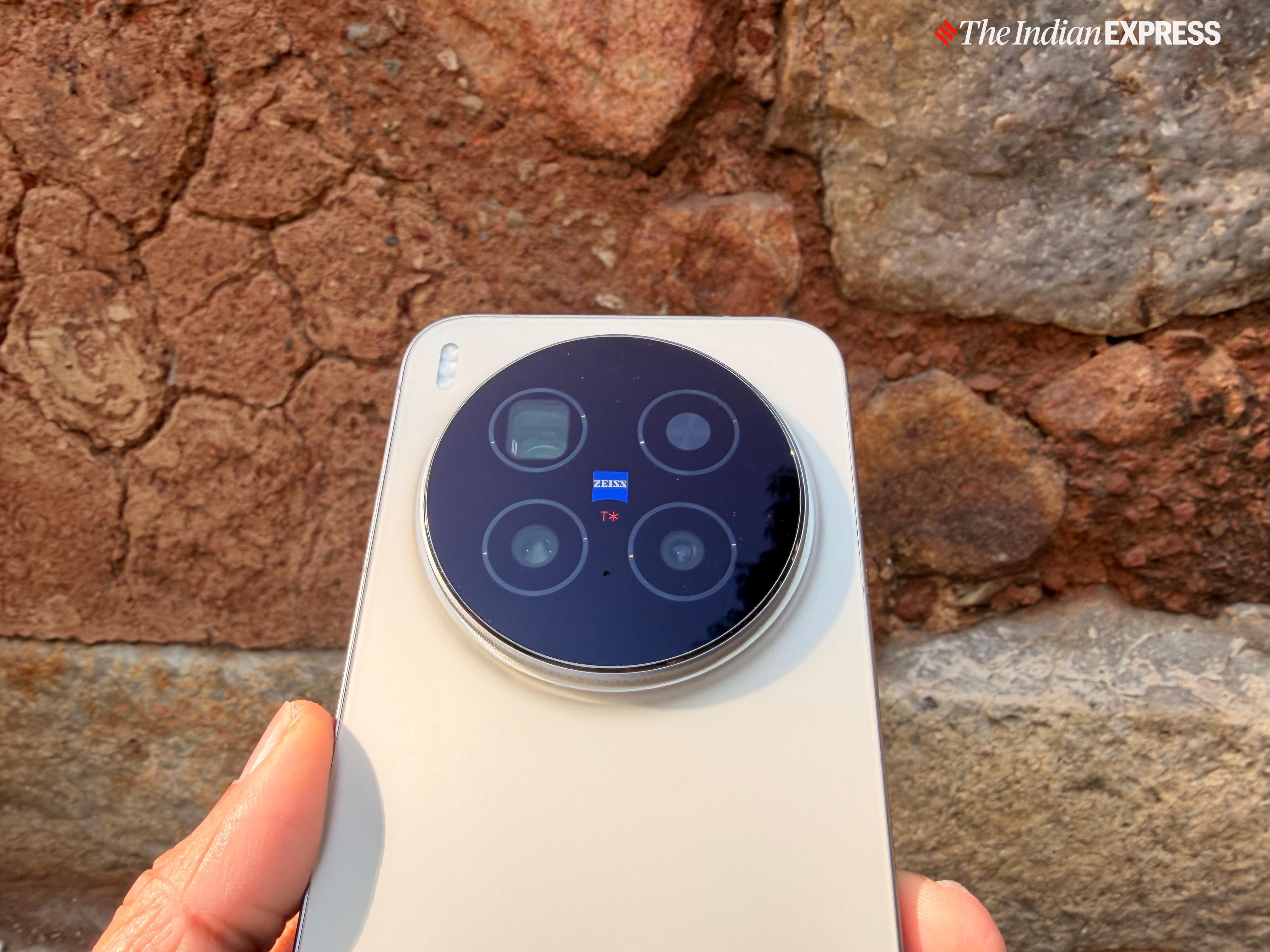 A bold, Zeiss-branded camera island that stands out without feeling bulky. (Image: The Indian Express/ Nandagopal Rajan)
The rear camera setup of the vivo X300 Pro is the same as that of its predecessor when it comes to specs. But the 200MP Zeiss APO telephoto camera and 50MP Sony LYT main camera are improvements on the earlier generation, along with the faster VS1 Pro Imaging Chip. There is also the 50MP ultra-wide camera. The flash has also been upgraded to work across all the focal lengths. For me, the most interesting aspect was the telephoto, now with 20x or 480mm of distortion-less zoom, perfect for bird watching and allied pursuits.
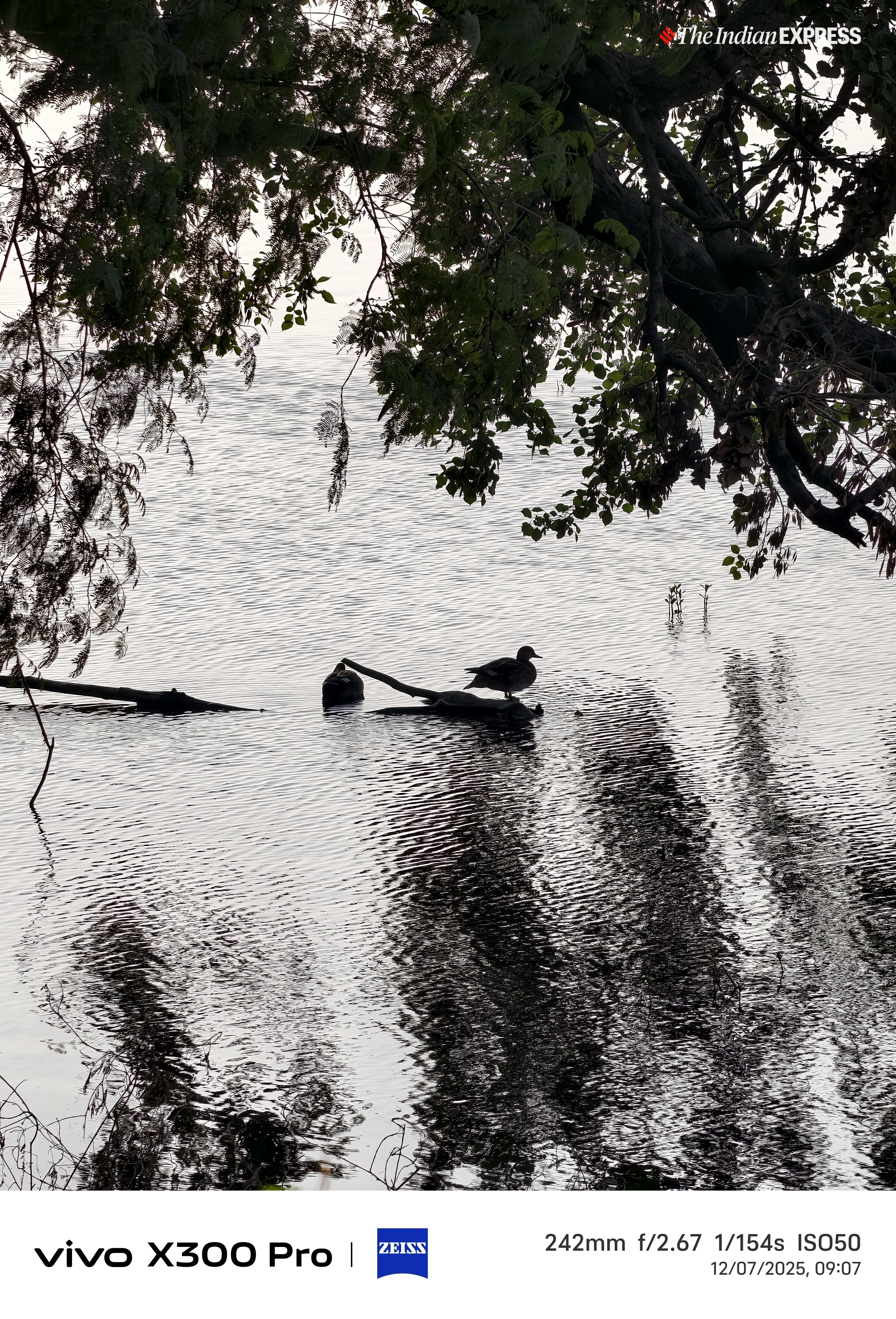
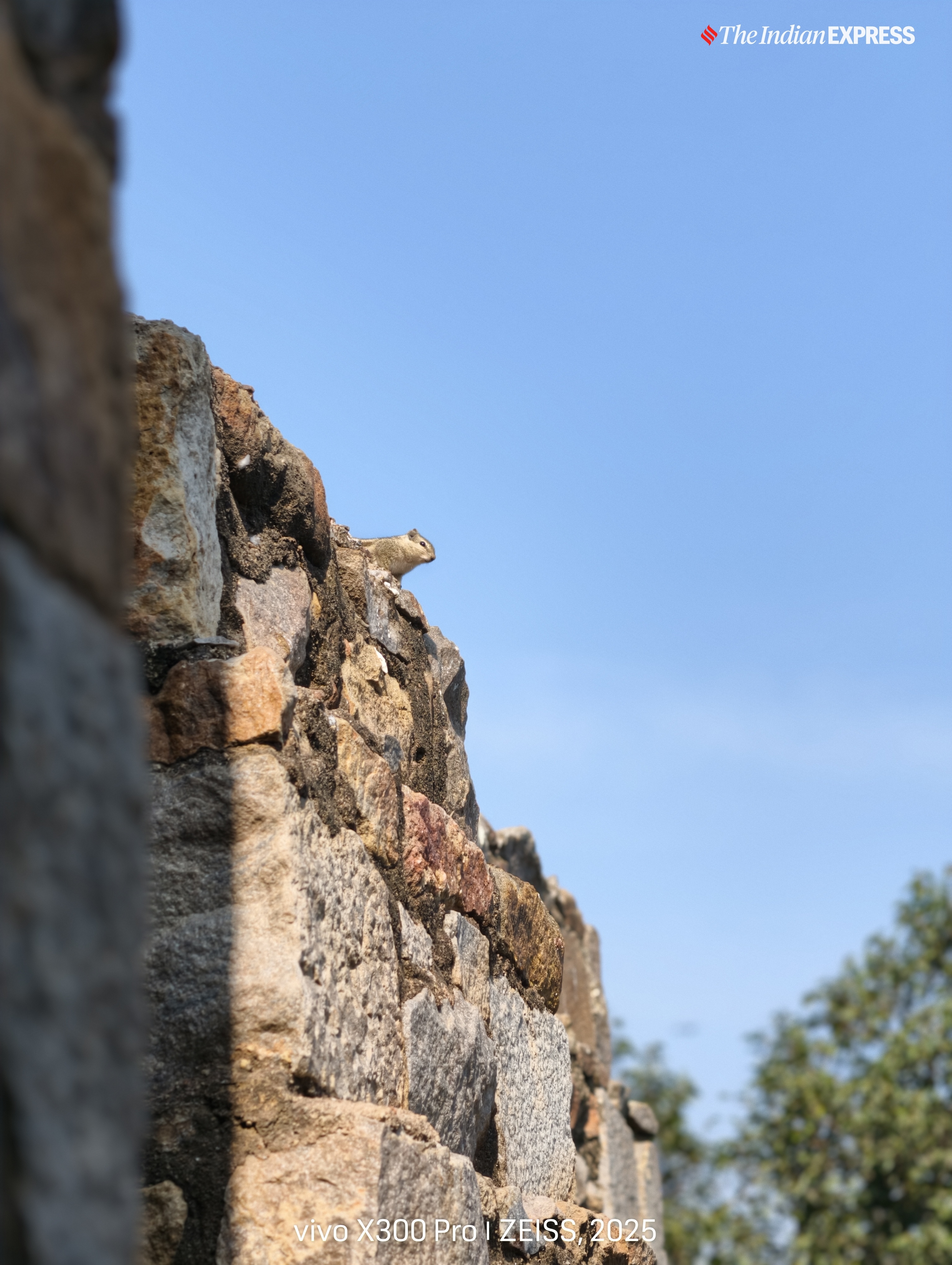
The ability to frame subjects from 0.6x to 20x opens up a range of possibilities as a photographer. At the Okhla bird sanctuary, what looked like specs on the Yamuna backwaters turned out to be a mix of migratory ducks on their winter sojourn.
One impressive factor was how you could get the same level of clarity in both video and photo mode. So I was mostly shooting video and tapping stills when needed.
Story continues below this ad
At 20x, the camera could capture details of the ducks which I soon realised where of many shapes and sizes.
 (Image: The Indian Express/ Nandagopal Rajan)
 (Image: The Indian Express/ Nandagopal Rajan)
 (Image: The Indian Express/ Nandagopal Rajan)
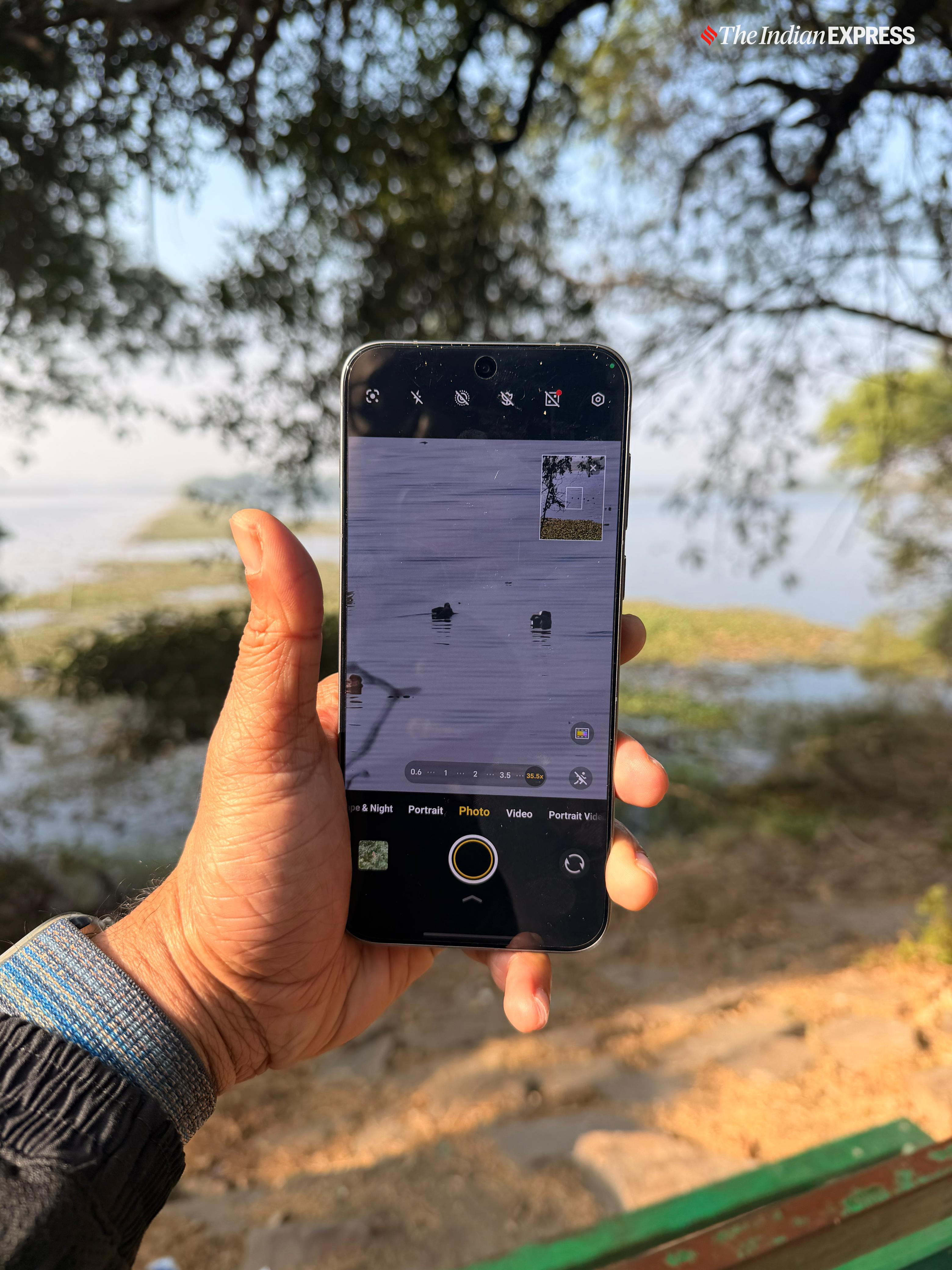 The Vivo X300 Pro’s 20x telephoto reveals migratory ducks that looked like distant specks to the naked eye. (Image: The Indian Express/ Nandagopal Rajan)
However, when I captured a parrot in the tree tops at 1172mm, the colours and details came out pretty good. Also, the camera was quite stable at this range.
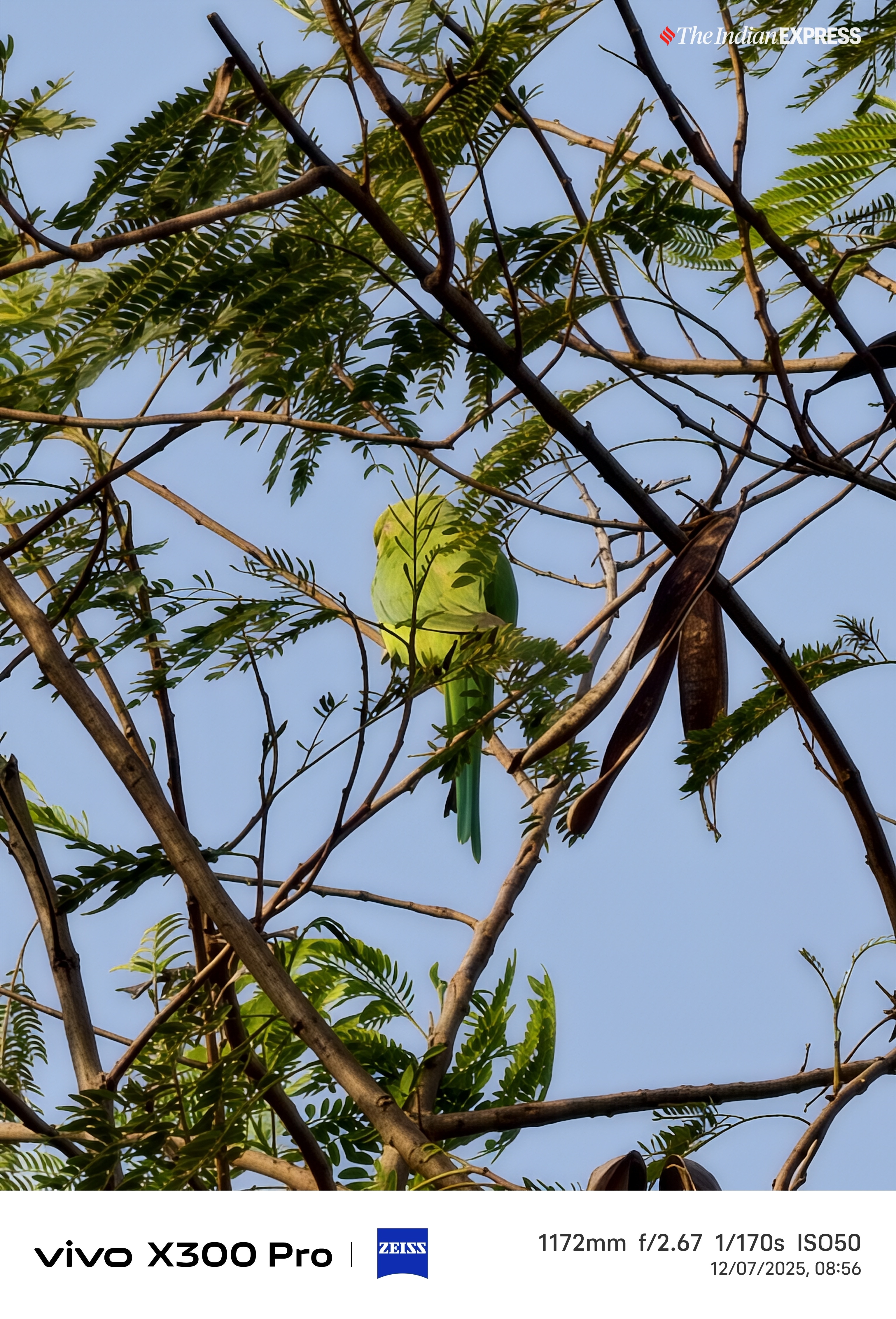 (Image: The Indian Express/ Nandagopal Rajan)
Pushing it a little further, I could capture the moon too, one early morning, stretching the zoom all the way to 1389mm. The results were stunning, though I was not sure this was what I had shot. A little bit too good to be true and with a dark sky though it was shot during the day.
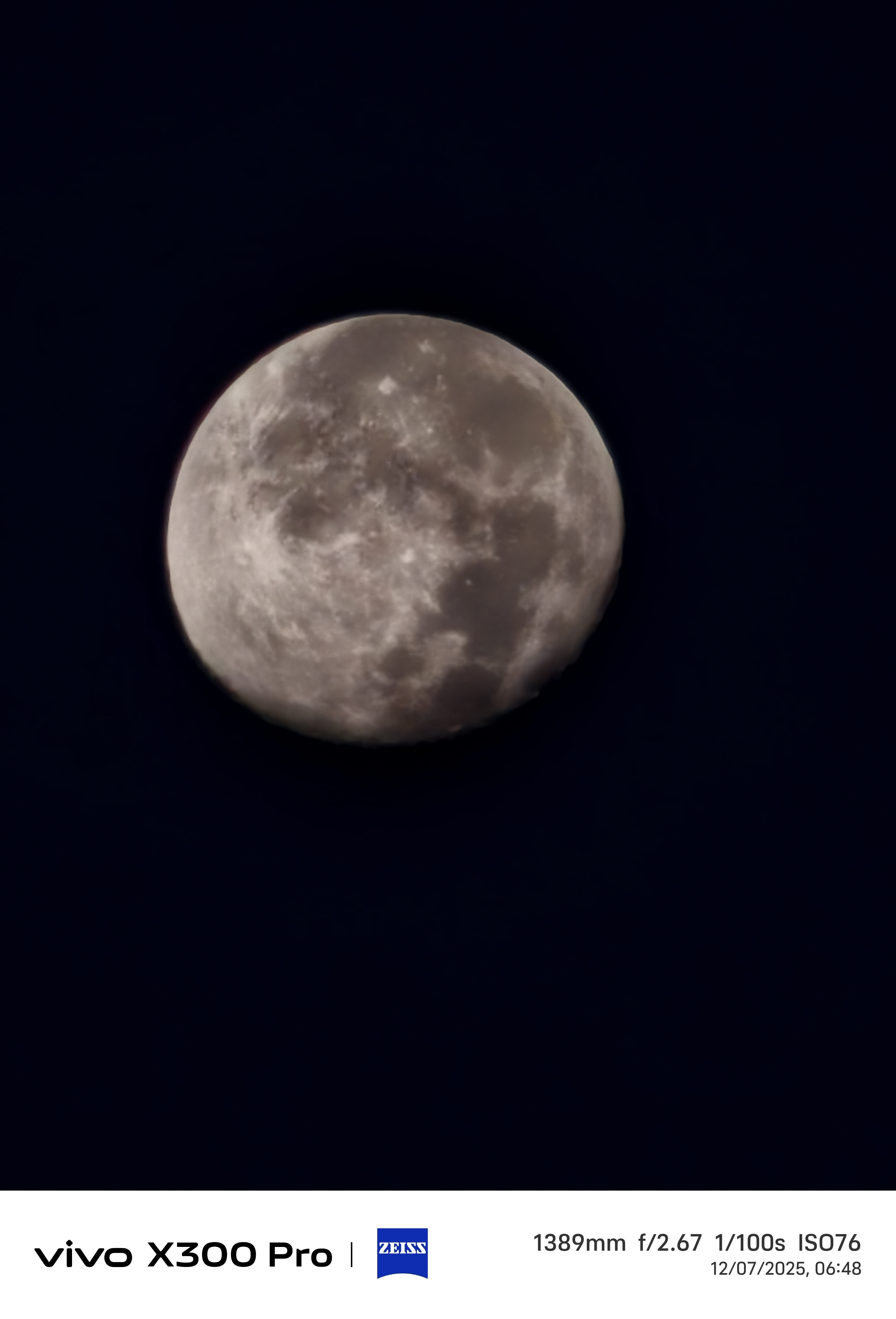 The moon shot shows just how far the X300 Pro’s hybrid zoom can stretch—though sometimes the results look a bit too perfect.(Image: The Indian Express/ Nandagopal Rajan)
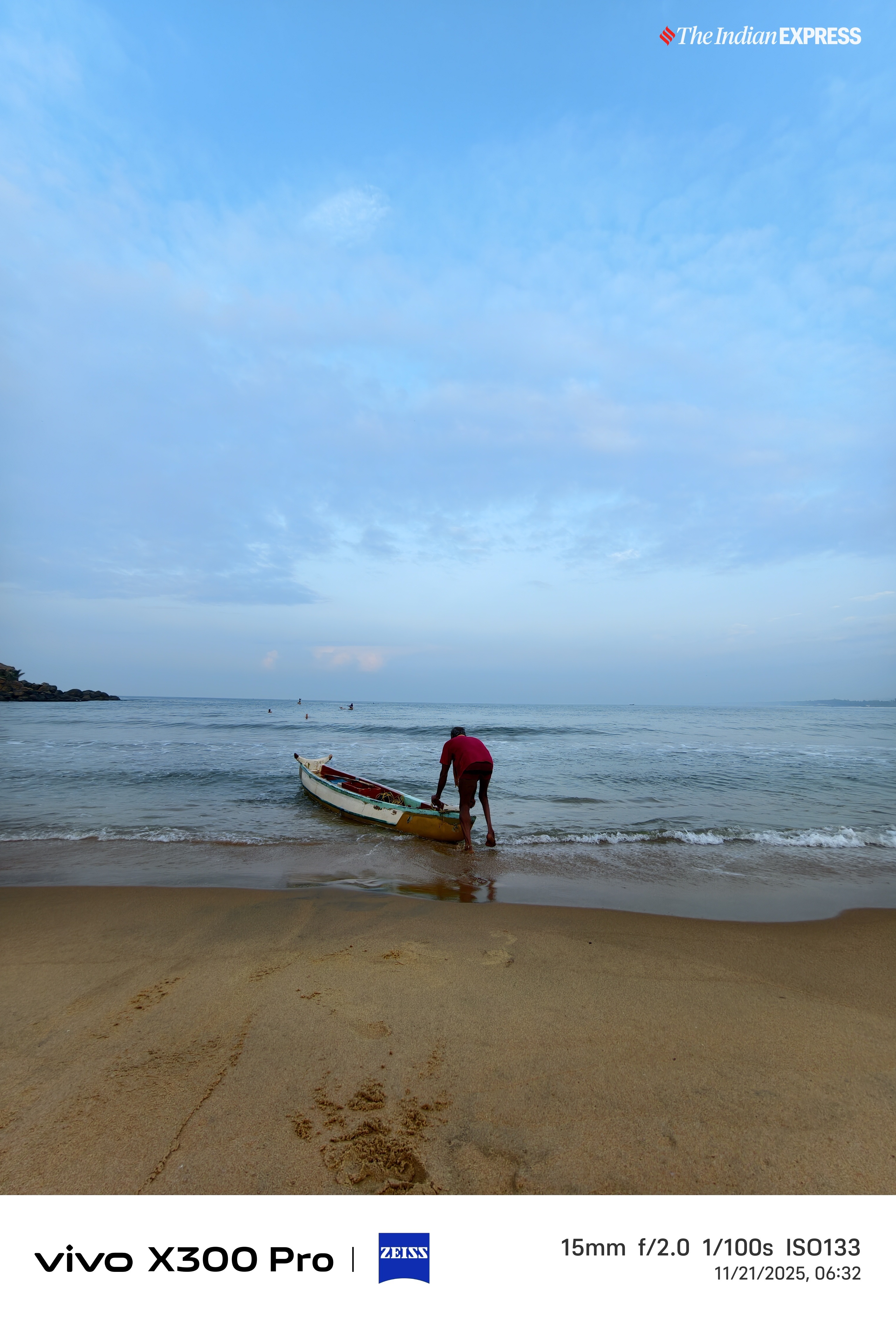
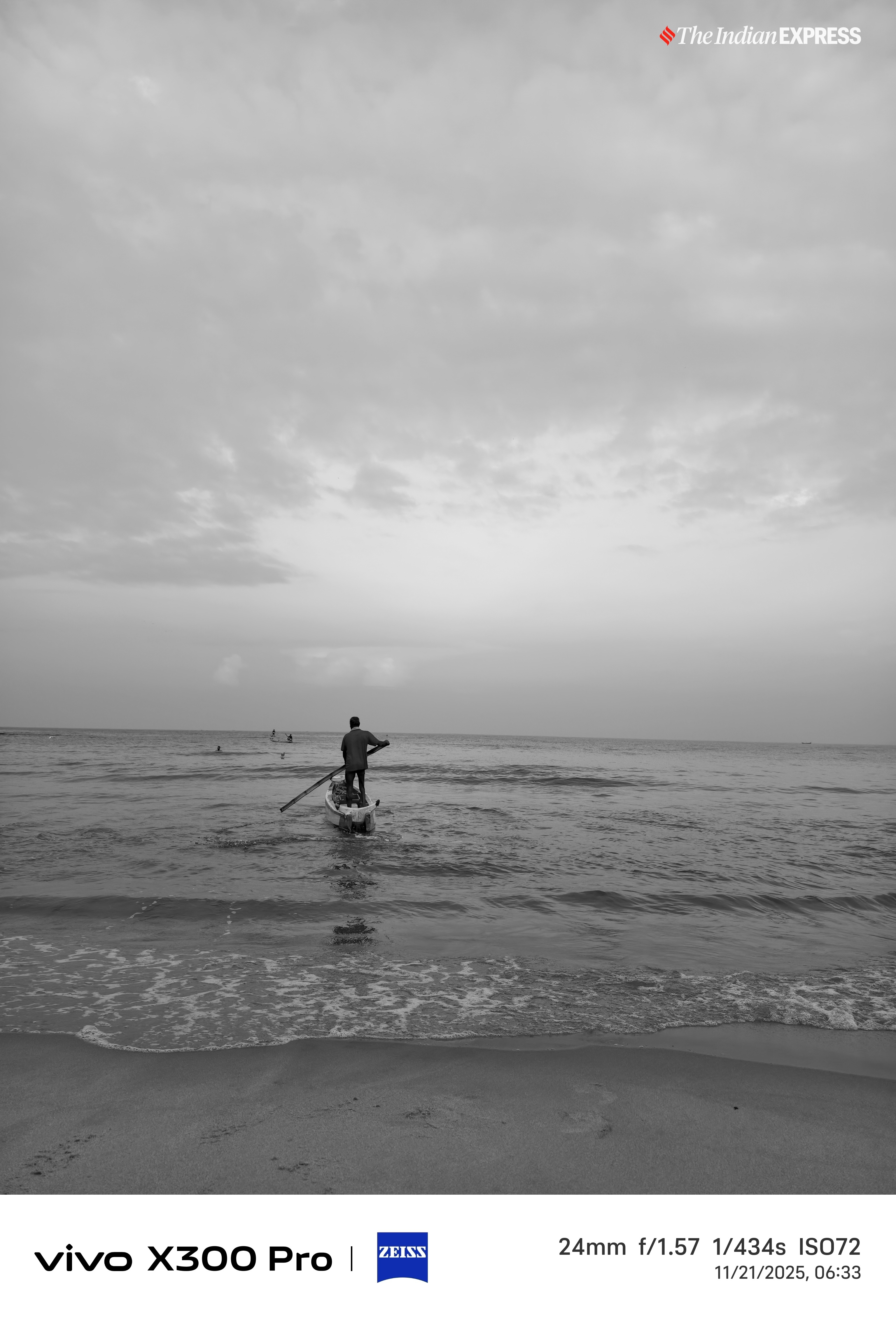
A couple of weeks back, I was in Kovalam for a conference, and there I could see a different side of this camera, capturing great night shots with the kind of details and colours once impossible on smartphone cameras. At times, the images do come out as too bright compared to the actual scene, but then you can always go to the Pro mode and take it with the exact settings you need.
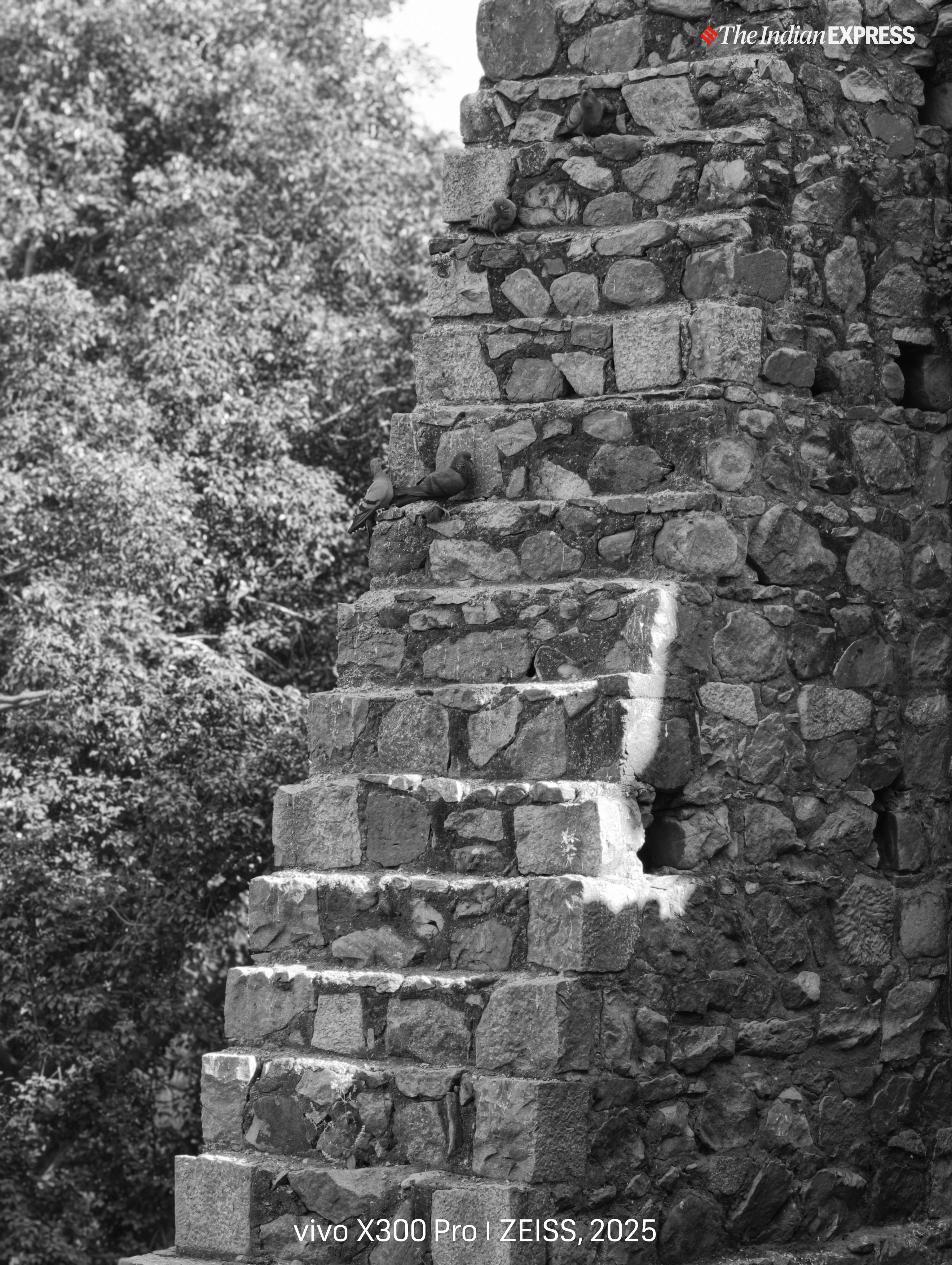
In fact, it is in the Pro mode that you can have real fun with this camera, playing with shutter speeds, etc. There are some Zeiss presets too, that work well when you are trying street photography or pushing your artistic envelope a bit. I ended up with some print-quality images that I will cherish for a long time. The B/W mode was a personal favourite.
Story continues below this ad
 (Image: The Indian Express/ Nandagopal Rajan)
 (Image: The Indian Express/ Nandagopal Rajan)
 (Image: The Indian Express/ Nandagopal Rajan)
While the camera by default shoots in Full HD at 30fps, you can shoot in 4K as well as 8K. And in 4K, you also take photos at the same resolution while shooting video. The video quality, even at 20x zoom, is pretty good, and you can shoot and edit YouTube class content just on the phone, with the processor being more than capable of handling all this. In fact, there is a smart editor mode that converts your clips into a fully produced video in seconds, which will impress a lot of people who don’t have the editing skills needed to impress on social media.
 (Image: The Indian Express/ Nandagopal Rajan)
 (Image: The Indian Express/ Nandagopal Rajan)
My grouse with the phone is that as one zooms from optical to digital zoom, while the images are okay on the screen, the final processed image often looks like a watercolour. I did not think it was like this in the X200 Pro. I get a sense that there is some software work happening, keeping the external telephoto lens in mind; however, I could not test this attachment.
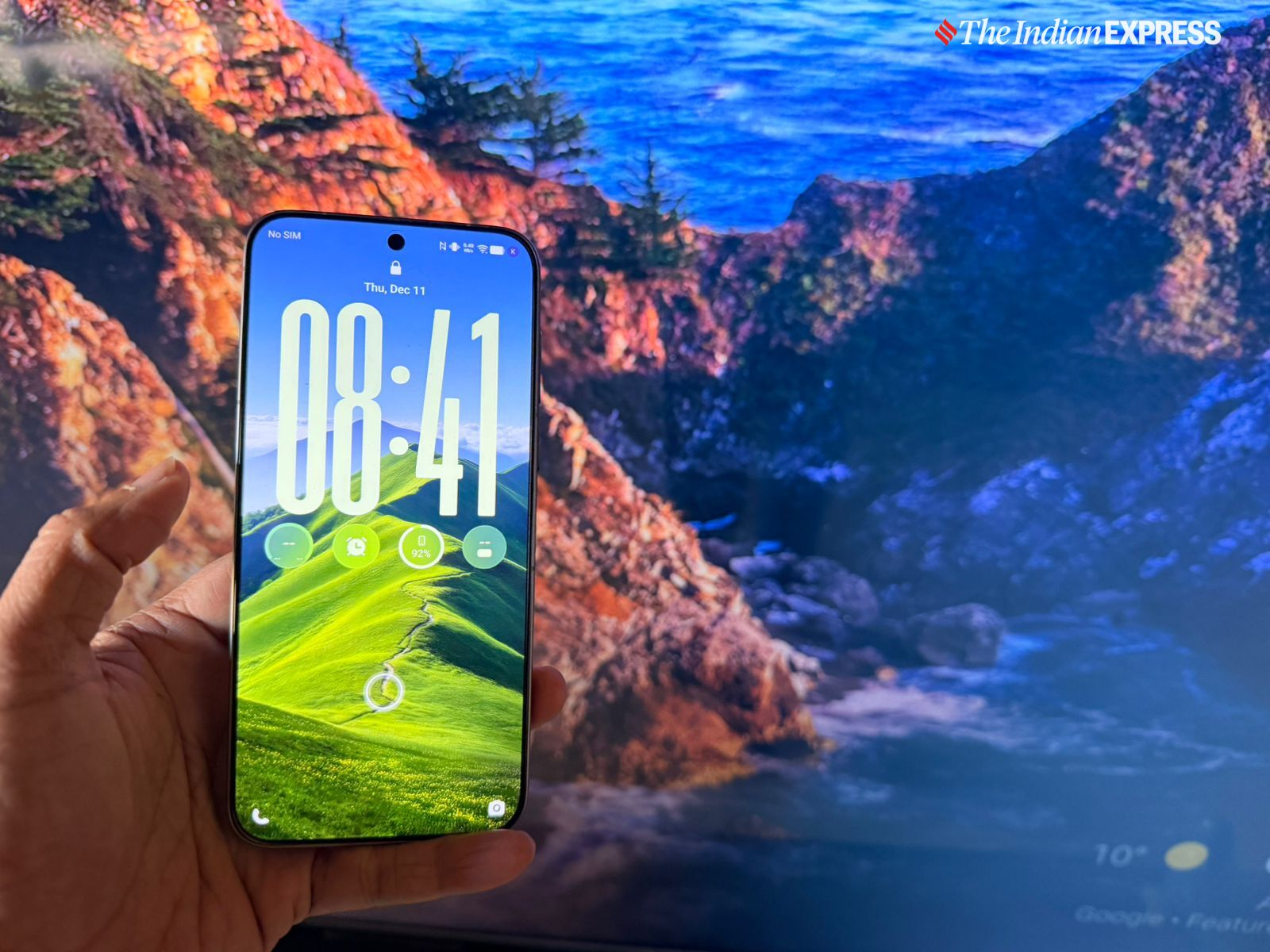 The lock screen starts off noisy, but customisation options let you tone it down fast. (Image: The Indian Express/ Nandagopal Rajan)
Also, the Origin OS6, though much improved, take some getting used to. Soon after setting up, I realised my lock screen was getting a bit too busy for my liking and was worried it had been taken over by some buggy app. But then I adjusted the settings to a theme that was more iOS-like and subtle. My issue with the latter was that such settings should be user-initiated and not default.
Overall, the vivo X300 Pro came across as a very capable phone, but one you might buy primarily for its camera. The camera continues to be a stunner, giving most smartphones a run for their money. However, the phone is also a missed opportunity in some ways, as there could have been more improvements if there really had to be a jump from X200 to X300.